THREE:
FORE:From this we see how useful is the art of printing, which makes the public, and not a few individuals, the guardians of the sacred laws, and which has scattered that dark spirit of cabal and intrigue, destined to disappear before knowledge and the sciences, which, however apparently despised, are in reality feared by those that follow in their wake. This is the reason that we see in Europe the diminution of those atrocious crimes that afflicted our ancestors and rendered them by turns tyrants or slaves. Whoever knows the history of two or three centuries ago and of our own, can see that from the lap of luxury and effeminacy have sprung the most pleasing of all human virtues, humanity, charity, and the toleration of human errors; he will know what have been the results of that which is so wrongly called ¡®old-fashioned simplicity and honesty.¡¯ Humanity groaning under implacable superstition; the avarice and ambition of a few dyeing with human blood the golden chests and thrones of[132] kings; secret assassinations and public massacres; every noble a tyrant to the people; the ministers of the Gospel truth polluting with blood hands that every day came in contact with the God of mercy¡ªthese are not the works of this enlightened age, which some, however, call corrupt.But perhaps the best illustrations of the tendency of actions to retain the infamy, attached to them by a past condition of fanatical punishments, are the cases of suicide and child-killing. Could a Greek of the classical period, or a cultivated historian like Plutarch reappear on earth, nothing would strike him more vividly than the modern conception or recent treatment of these crimes. According to Plutarch, Lycurgus, the great Spartan lawgiver, met his death by voluntary starvation, from the persuasion that even the deaths of lawgivers should be of use to mankind, and serve them with an example of virtue and greatness; and Seneca held that it was the part of a wise man not to live as long as he could but as long as he ought. With what astonishment, then, would not Plutarch or Seneca read of recent European punishments for suicide¡ªof Lady Hales[75] losing the estate she was jointly possessed of with her husband, the Judge, because he drowned himself; of the stake and the cross-roads; of the English law which still regards suicide as murder, and condemns one of two men who in a mutual attempt at self-destruction survives the other to the punishment of the ordinary murderer! Is it possible, he would ask, that an action which was once regarded as among the noblest a man could perform, has really come to be looked upon with any other feeling than one of pity or a sad respect?
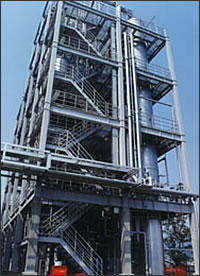
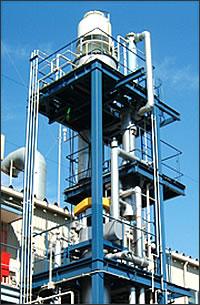
Methanol refinement systems, amyl alcohol refinement systems, ethanol refinement systems, hexanol distillation systems, propanol refinement systems, cyclohexanol distillation systems, isopropanol dehydration systems, ethylene glycol recovery systems, and butanol distillation systems.
FORE:Offences, therefore, against personal security and liberty are among the greatest of crimes. Under this head fall not only the assassinations and thefts of the common people, but those also committed by the nobles and magistrates, whose influence, acting with greater force and to a greater distance, destroys in those subject to them all ideas of justice and duty, and gives strength to those ideas of the right of the strongest, which are equally perilous ultimately to him who exercises no less than to him who endures it.The necessity of remedying the disorders caused by the physical despotism of each man singly produced the first laws and the first magistrates; this was the end and object of the institution of societies, and this end has always been maintained, either in reality or appearance, at the head of all codes, even of those that operated otherwise. But the closer contact of men with one another and the progress of their knowledge brought about an endless series of mutual actions and needs, which ever lay beyond the foresight of the laws and below the actual power of individuals. From this epoch began the despotism of opinion, which afforded the only means for obtaining from others those benefits and averting those evils, for which the laws failed to provide. It is this opinion that is the trouble equally of the wise man and the fool; that has raised the semblance of virtue to higher credit than virtue itself; that even makes the rascal turn missionary, because he finds his own[211] interest therein. Hence the favour of men became not only useful but necessary, if a man would not fall below the general level. Hence, not only does the ambitious man seek after such favour as useful to himself, and the vain man go begging for it as a proof of his merit, but the man of honour also may be seen to require it as a necessity. This honour is a condition that very many men attach to their own existence. Born after the formation of society, it could not be placed in the general deposit; it is rather a momentary return to the state of nature, a momentary withdrawal of one¡¯s self from the dominion of those laws which, under the circumstances, fail to afford the sufficient defence required of them.
Hexane distillation systems, tall oil distillation systems, benzene distillation systems, lubricating oil refinement systems, xylene-free distillation systems, low-boiling gas distillation systems, ethylbenzene recovery systems, fusel oil distillation systems, naphthalene distillation systems, propylene recovery systems, and turpentine oil distillation systems.
FORE:Neither the noble nor the rich man ought to be able to pay a price for injuries committed against the feeble and the poor; else riches, which, under the[206] protection of the laws, are the prize of industry, become the nourishment of tyranny. Whenever the laws suffer a man in certain cases to cease to be a person and to become a thing, there is no liberty; for then you will see the man of power devoting all his industry to gather from the numberless combinations of civil life those which the law grants in his favour. This discovery is the magic secret that changes citizens into beasts of burden, and in the hand of the strong man forms the chain wherewith to fetter the actions of the imprudent and the weak. This is the reason why in some governments, that have all the semblance of liberty, tyranny lies hidden or insinuates itself unforeseen, in some corner neglected by the legislator, where insensibly it gains force and grows. The good faith of contracts and the security of commerce compel the legislator to assure to creditors the persons of insolvent debtors. But I think it important to distinguish the fraudulent from the innocent bankrupt, the former of whom should receive the same punishment as that assigned to false coiners, since it is no greater crime to falsify a piece of coined money, the pledge of men¡¯s mutual[217] obligations, than to falsify those obligations themselves. But the innocent bankrupt¡ªhe who, after a searching inquiry, has proved before his judges that the wickedness or misfortune of some one else, or the inevitable vicissitudes of human prudence, have despoiled him of his substance¡ªfor what barbarous reason ought such an one to be thrown into prison, and deprived of the only poor benefit that remains to him, a barren liberty, in order to suffer the agonies of the really guilty, and, in despair at his ruined honesty, to repent perhaps of that innocence, by which he lived peacefully under the protection of those laws that it was not in his power not to offend against? Laws, too, dictated by the powerful by reason of their rapacity, and endured by the feeble by reason of that hope, which generally glimmers in the human heart, and leads us to believe that unfavourable contingencies are reserved for others, favourable ones for ourselves! Men left to their natural feelings love cruel laws, however much, as subject to them themselves, it might be for their individual interest that they should be mitigated; because their fear of being injured by others is greater than their desire to inflict injuries themselves.
Ether distillation systems, camphor distillation systems, epichlorohydrin distillation systems, aniline distillation systems, dioxane refinement systems, acetonitrile distillation systems, furfural refinement systems, formalin distillation systems, cyclohexane distillation systems, monoethanolamine rectification systems, polyglycol ether distillation systems, dimethylformamide recovery systems, acrylic glycol ether distillation systems, acrylonitrile refinement systems, acetone recovery systems, pyridine distillation systems, methyl ethyl ketone recovery systems, picoline distillation systems, methyl isobutyl ketone recovery systems, and acetaldehyde recovery systems.